Serve the Change
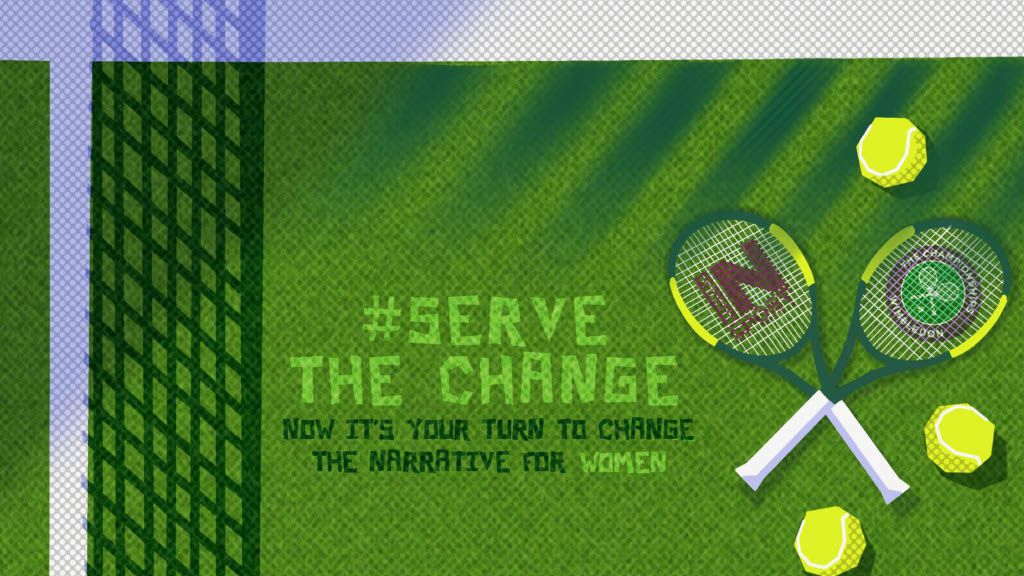
Serve the change is a motion graphics piece that works in collaboration with Wimbledon and Women in Sports as a tool to call for action regarding discrimination towards female athletes.
Initial research
During our research journey, we came across many footages that shoock us to the core- from real interview scenes of females athletes being objectified by interviewers, to articles stating horrifying statistics about women quitting their chosen sports due to abuse. We wanted to communicate a powerful message to encourage sports consumers change how they talk and perceive women in sports in the media by starting conversations differently and influencing those around them.
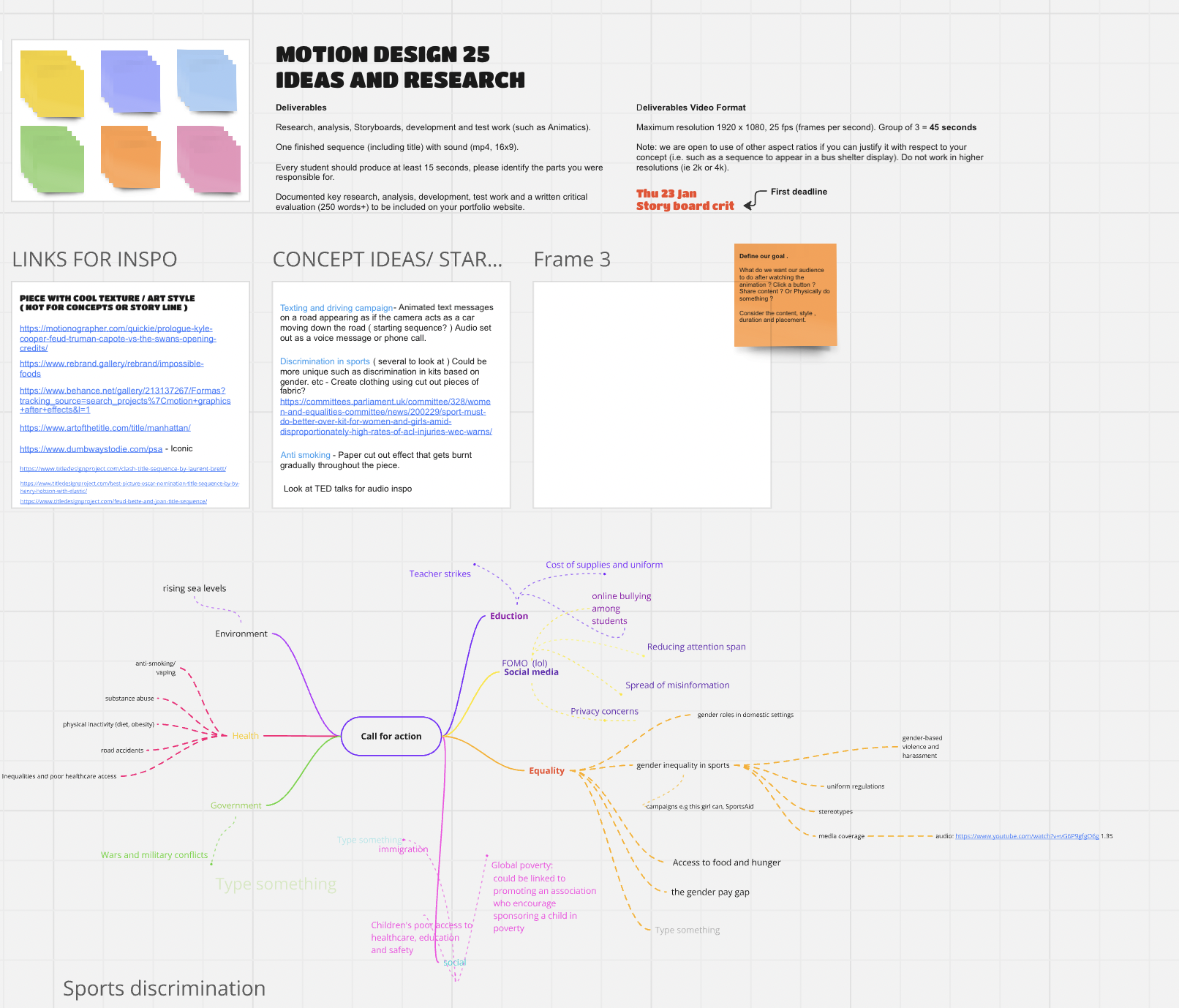
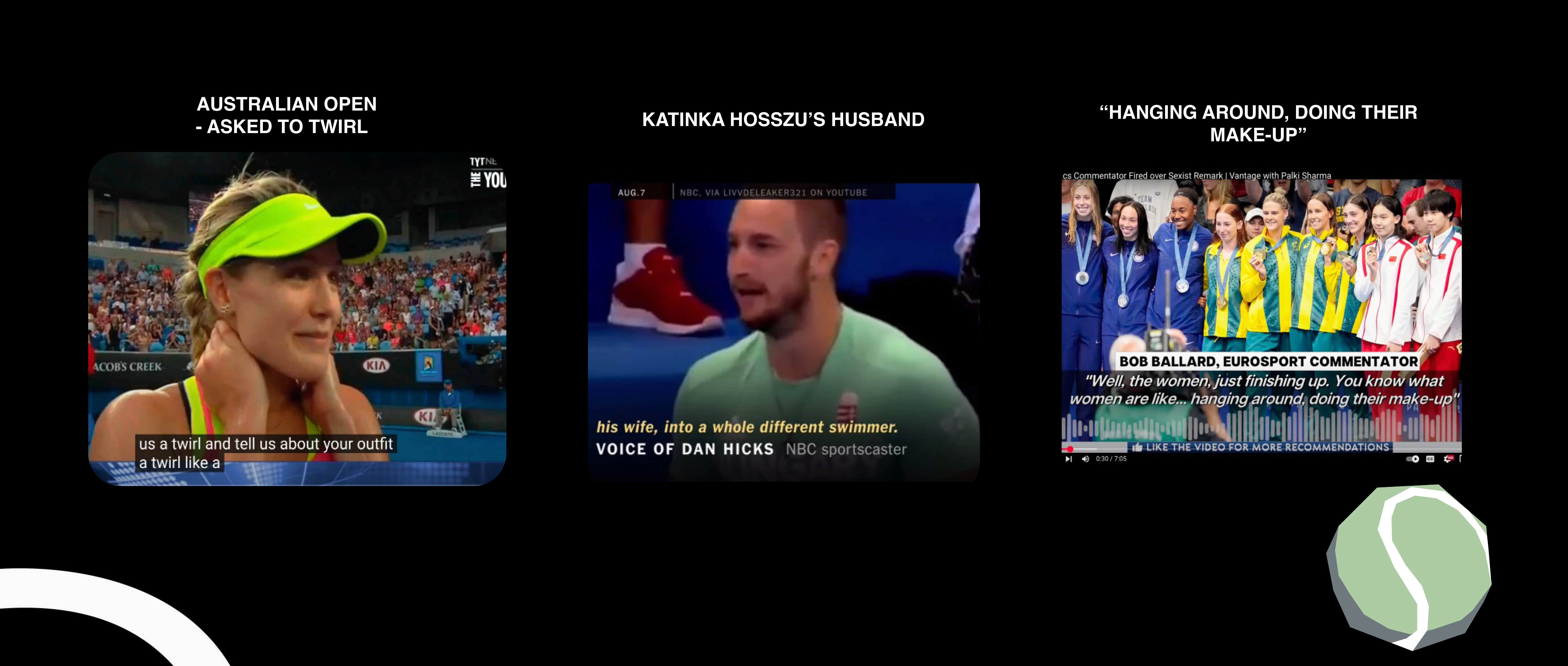
Findings that motivated us to choose our narrative
My group and I were determined to address the problem of discrimination towards women in sports and our research findings only fueled our passion in this subject matter. We each collected segments from interviews which showed shocking footage of the media demonstrating a clear sexism and injustice towards female athletes.
We aimed to collaboratively design a narrative which tells storie sof injustice through the perspective of a sports consumer, showing the absurdity of these stories.
How can we convey a powerful message via motion graphics?
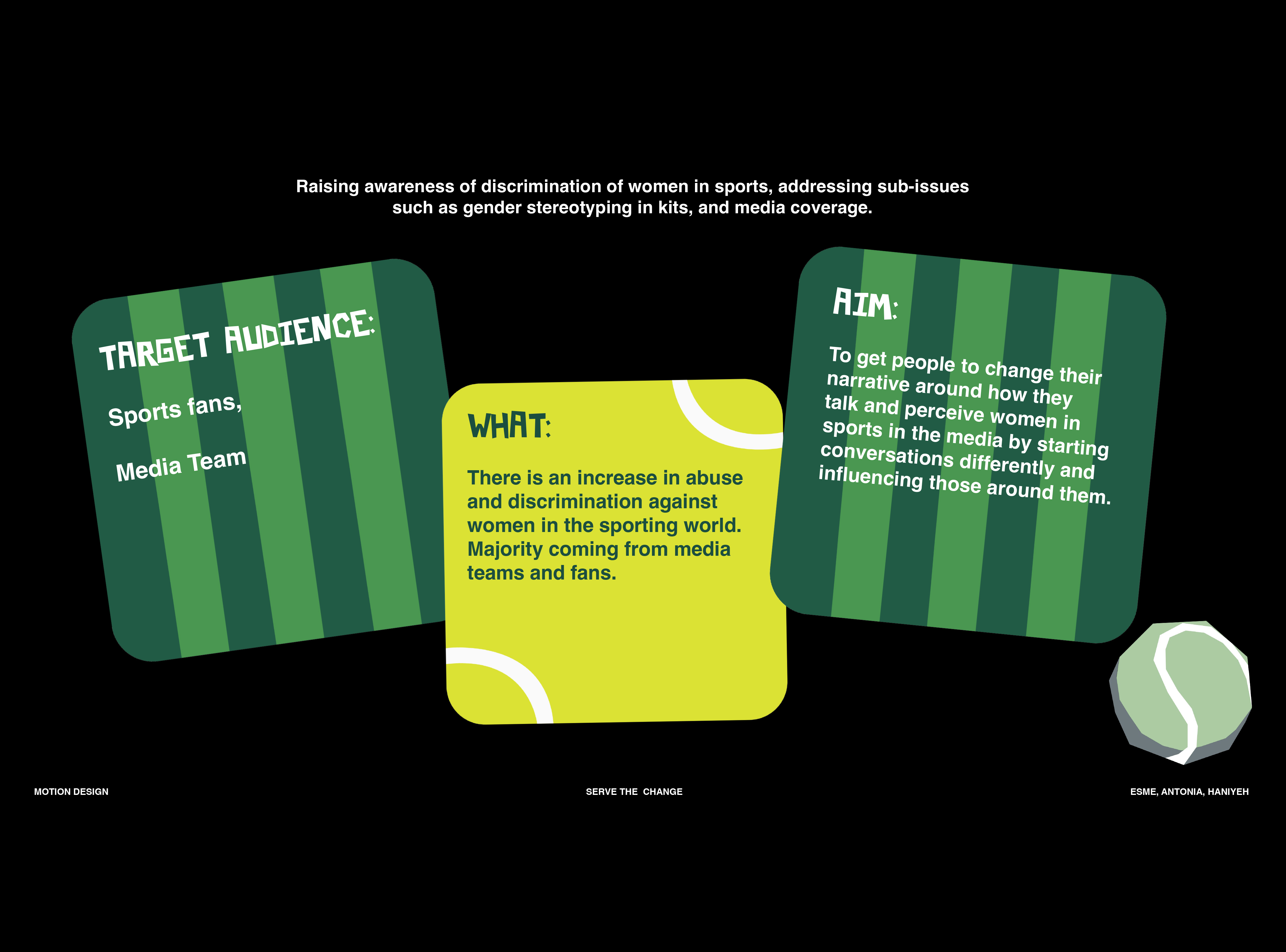
After brainstorming topics that we were collectively passionate about, we decided to focus on discrimination towards women in sports, addressing sub-issues such as gender stereotyping in kits, and inequality in media coverage.
Designing an audio that carries the story
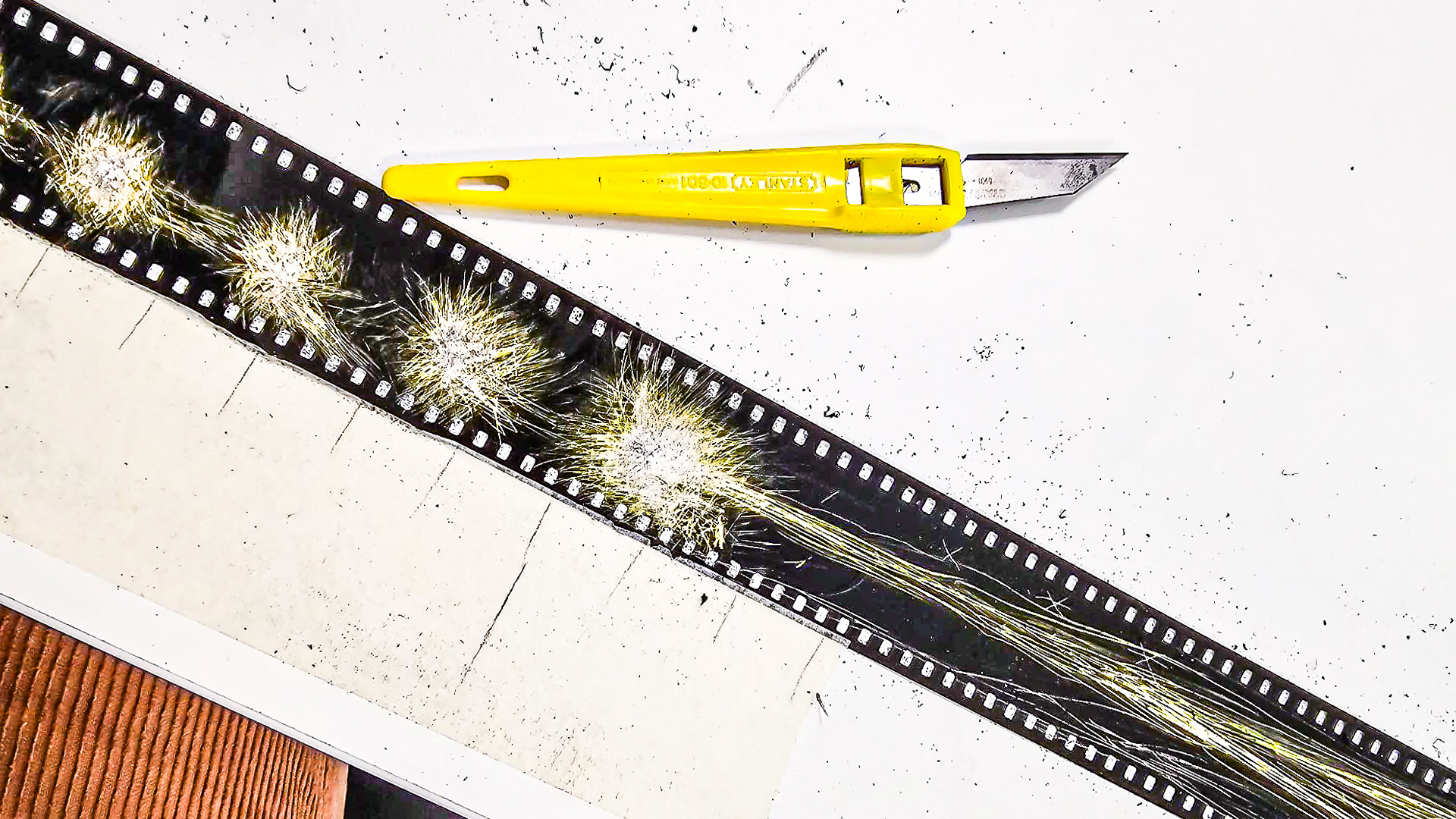
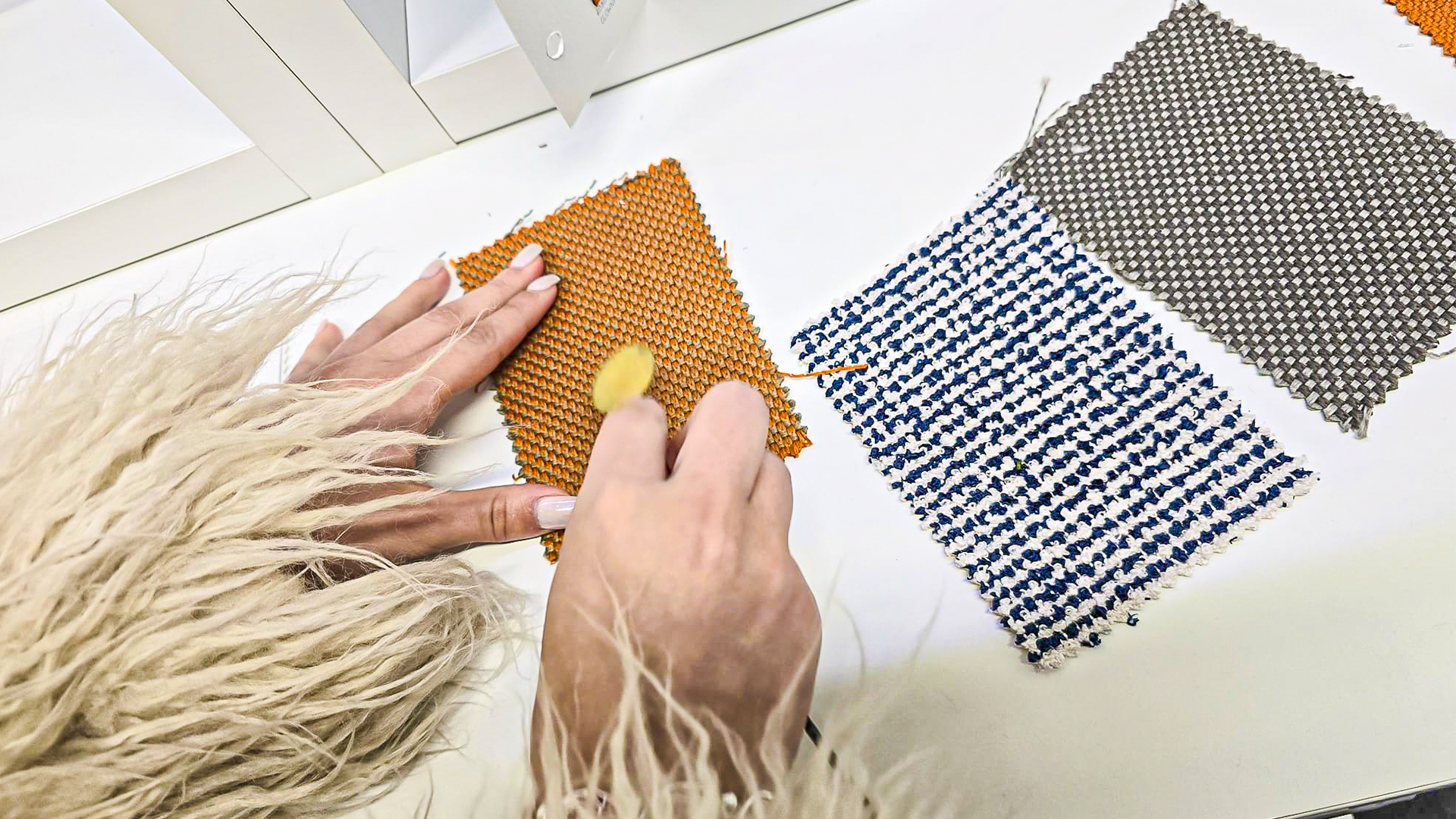
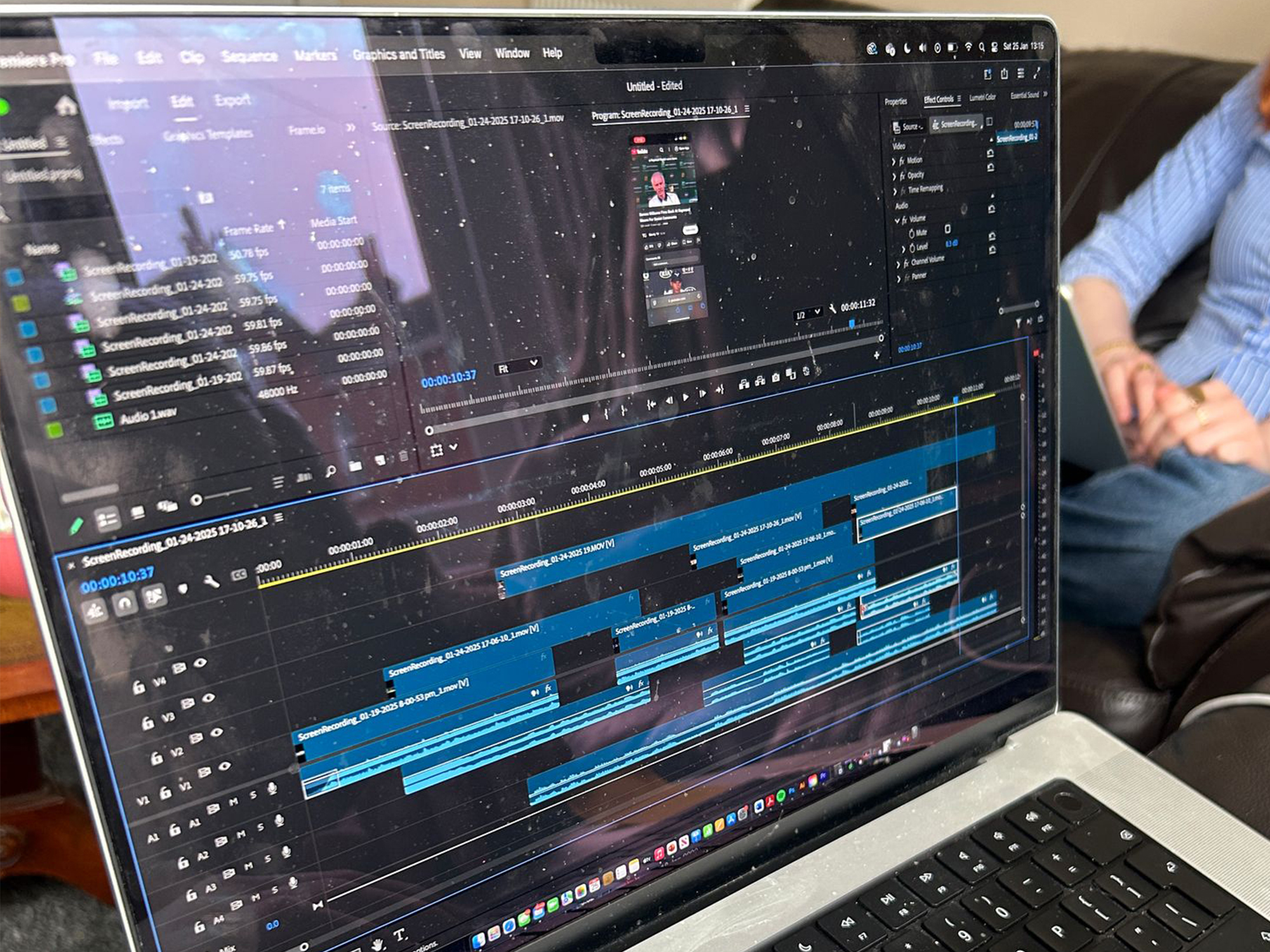
Taking inspiration from various interview footages, my group and I experimented with collaging video clips to create a linear narrative, demonstrating a sport fan’s journey of shifting their perspective, from discriminating women in sports, to leaving positive comments online. Initially, we stacked audios on top of each other to emote a sense of chaos, showing that the fan gets gradually overwhelmed by the amount of hatred and inequality.
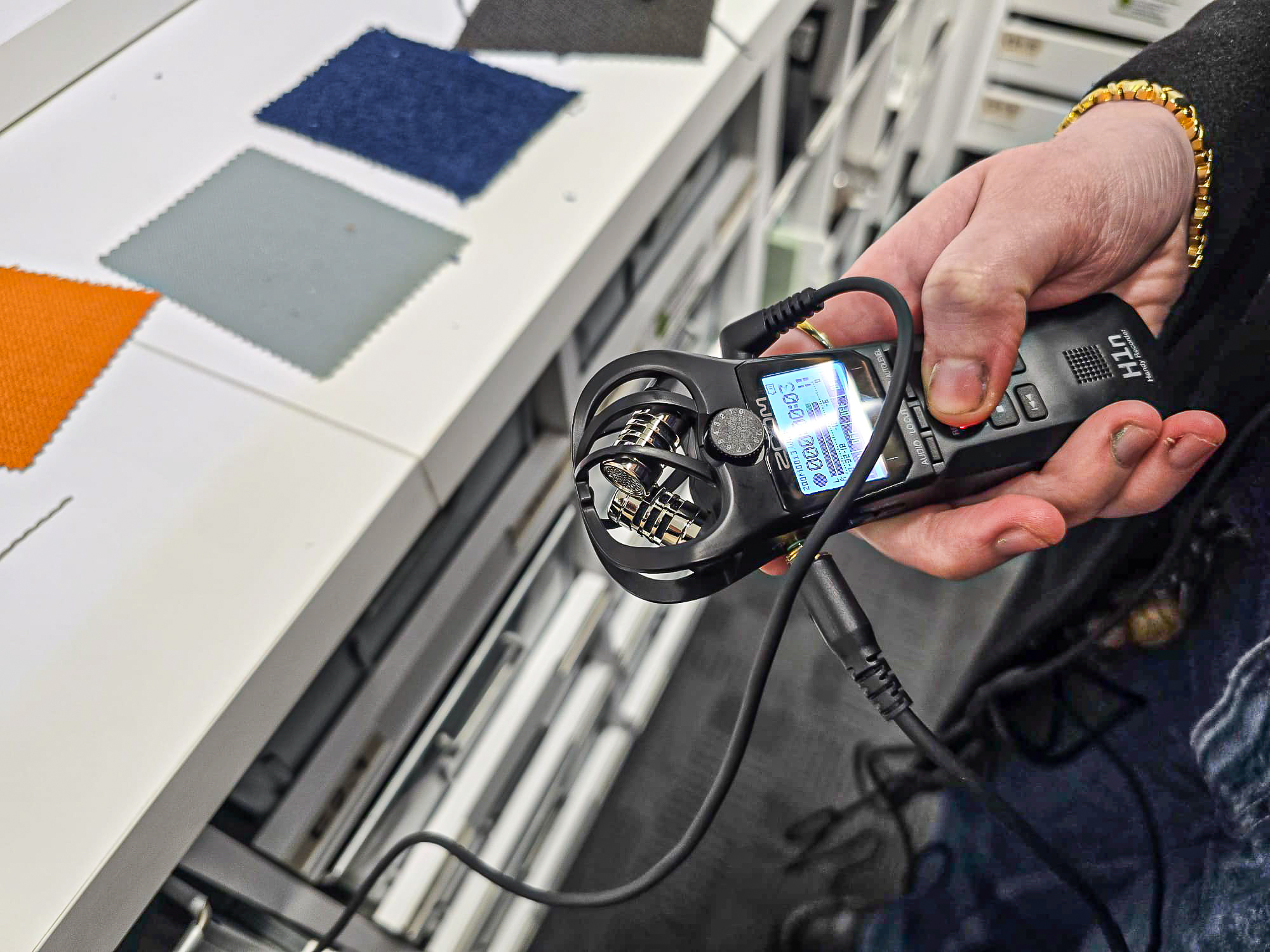
Below shows examples of audio files that we gathered to build up in the background of our motion piece. These show a glimpse into the camera shutter and spotlight sound effects that we used. Our aim was to use real footage to ensure our final piece has a sense of reality to emphasise this is based on a true story.
Finalisning a script
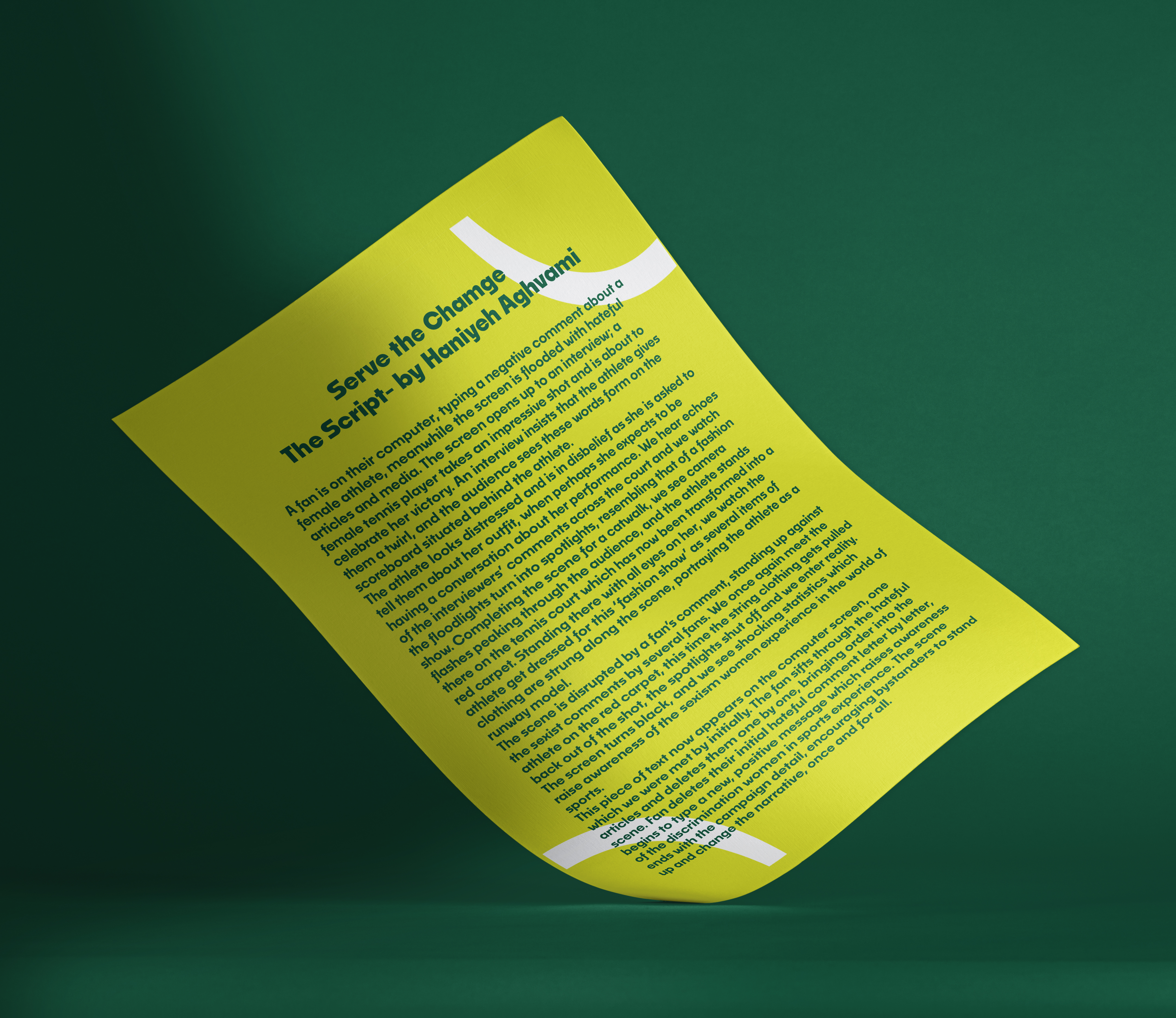
Once we gathered our research, it was time to finalise a scrip before moving onto storyboarding. I took the initiative to communicate with my teammates, Esmé and Antonia to clarify the tone of voice and content of our script. I referred to the website 'Boords' for guidance on writing a clear and concise script. As a designer, I believe storytelling is vital and writing this script allowed me to both play to my strength in writing as well as challenge myself in scripting for a motion graphics for the first time.
A narrative to remember
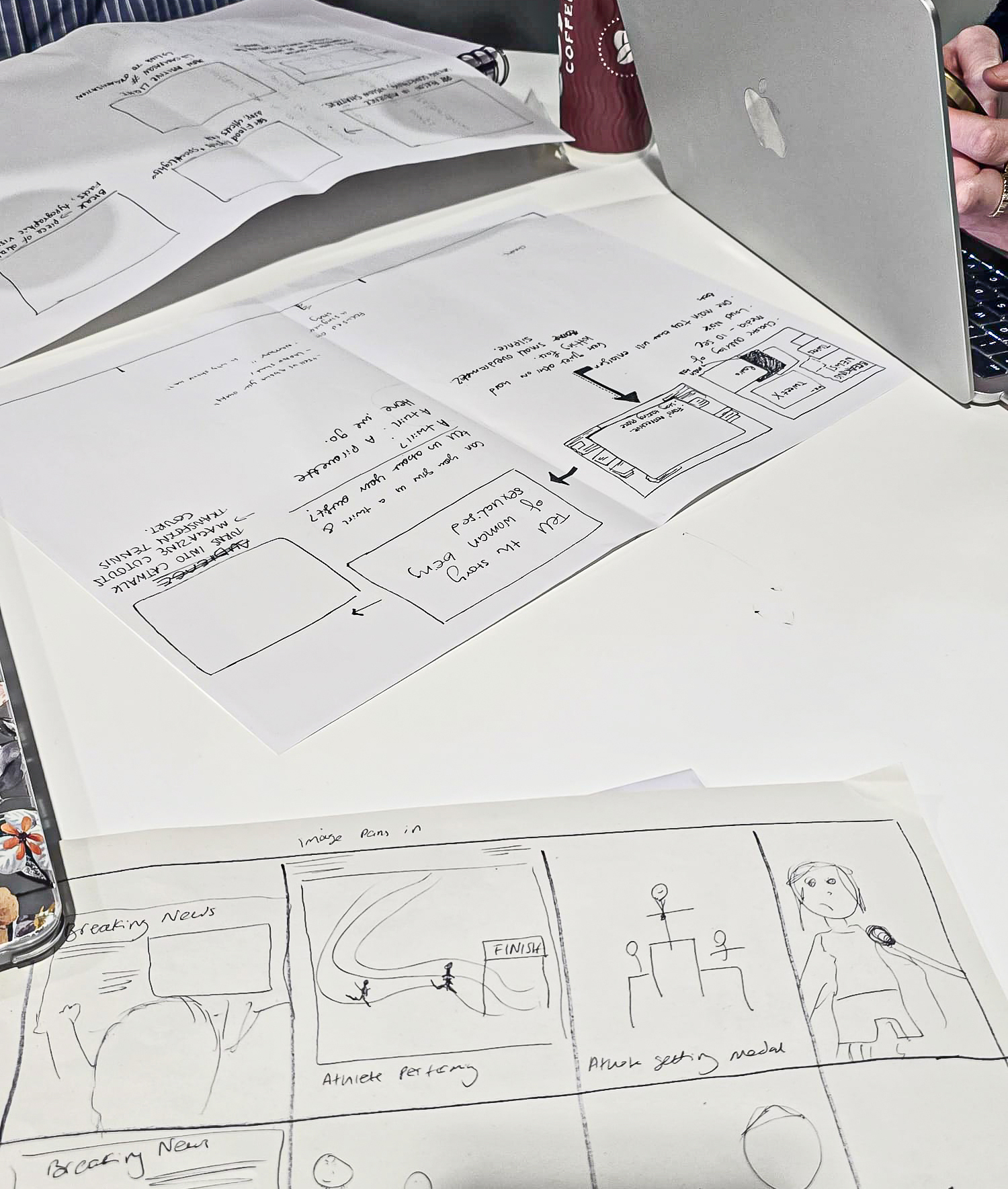
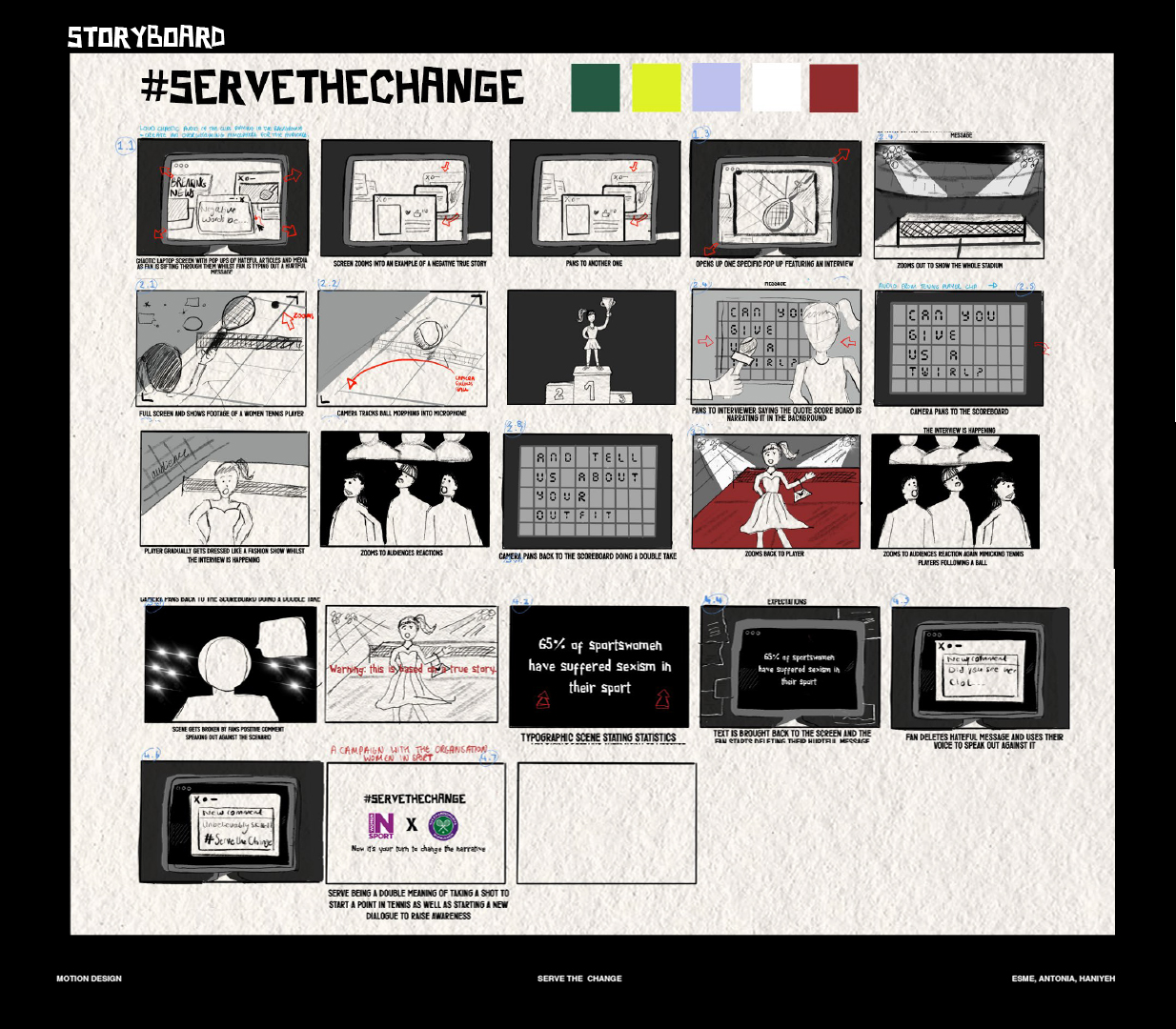
To develop our story, we began by individually drafting storyboards to ensure our narrative was cohesive and clear. We found it challenging to narrow our ideas to create one final storyboard but through clear communication and revisiting our target audience, we were soon able to solve this problem.
During this stage, my job was to listen to the narrative as it we were discussing it, and draw quick sketches to bring the story into life, which I really enjoyed. I then gathered all storyboards and summarised them into one concise outcome. To prepare for the first crit, we developed our storyboard by adding colour, arrows to highlight camera movements and captions for clear communication with our peers and tutors.
Testing the Animatic
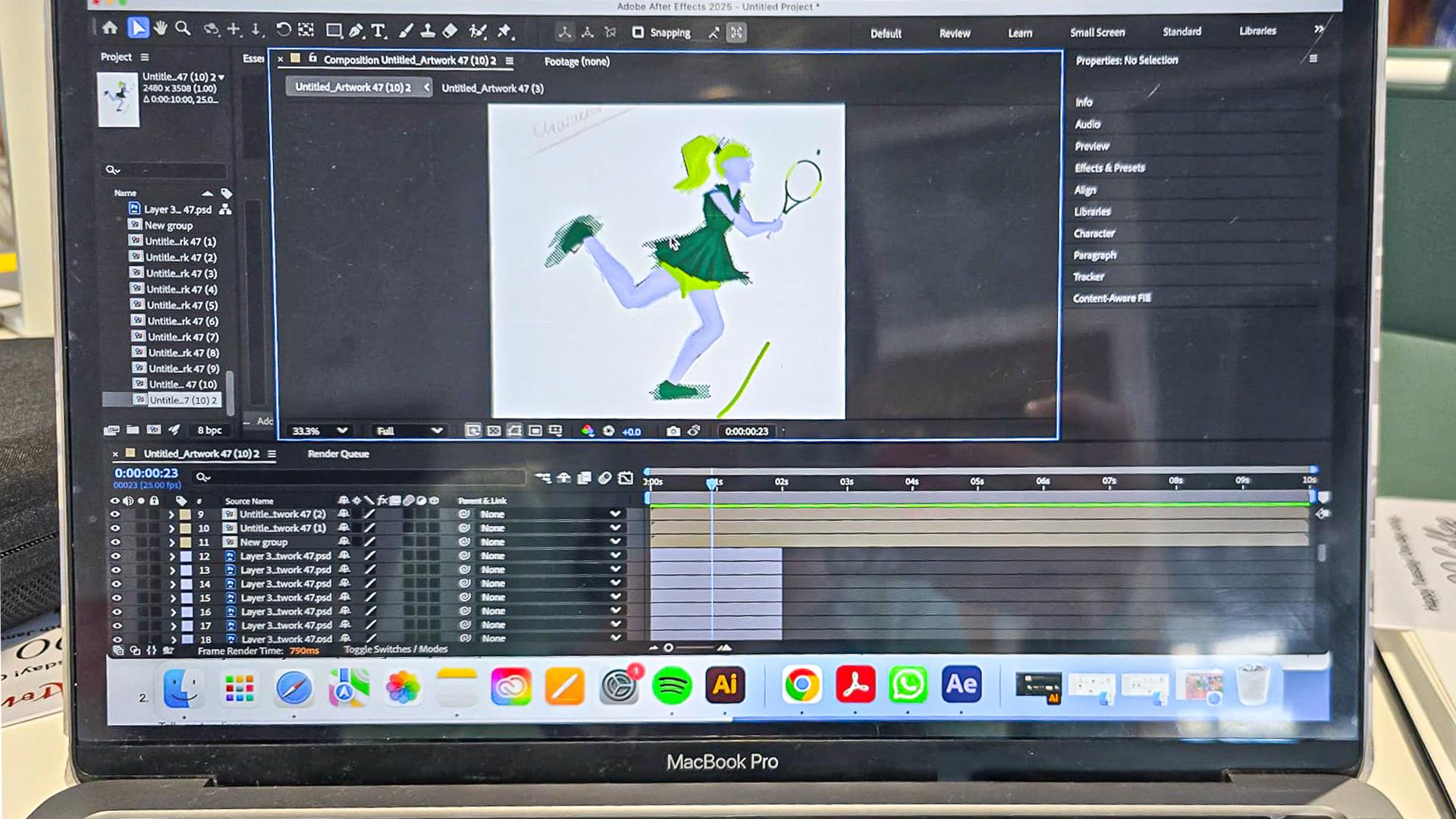
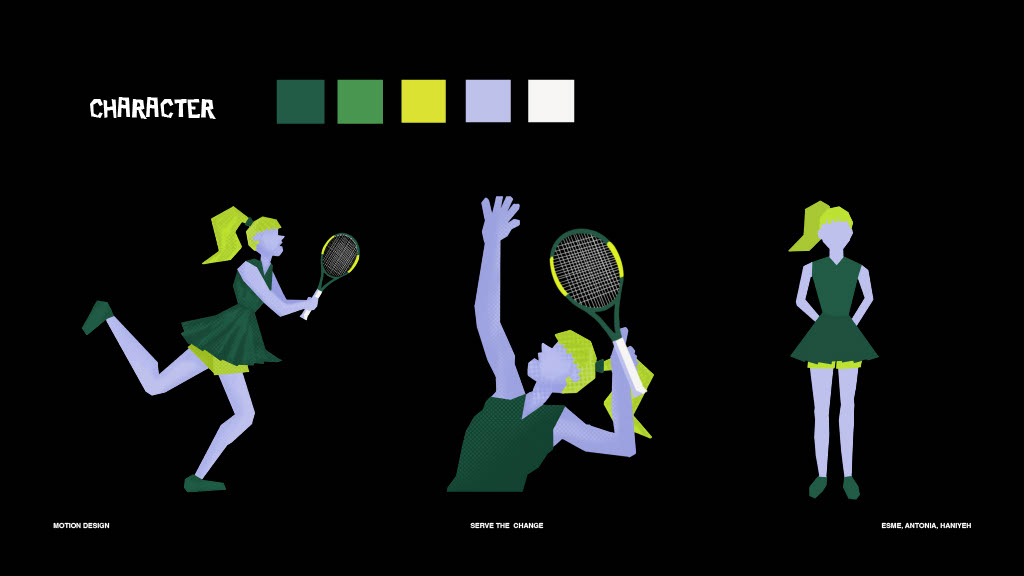
It was challenging to match our audio with the storyboard so testing the animatic was a crucial step for us. I was pleased with the result in audio as it successfully conveyed the chaos of media at the start, followed by a sudden silence to create impact as the call for action scene appears, to allow time for the audience to reflect. After the interim crit and receiving valuable feedback from peers and tutors, we began discussing an overall style to commit to. I was excited to experiment with character illustration as this is where my strengths lie.
How do we bring this narrative into life?
Our next challenge was to create a call for action to make our message tailored to a target audience and maximise chances of making changes to negative behaviour.
Keeping an audience in mind: Wimbledon
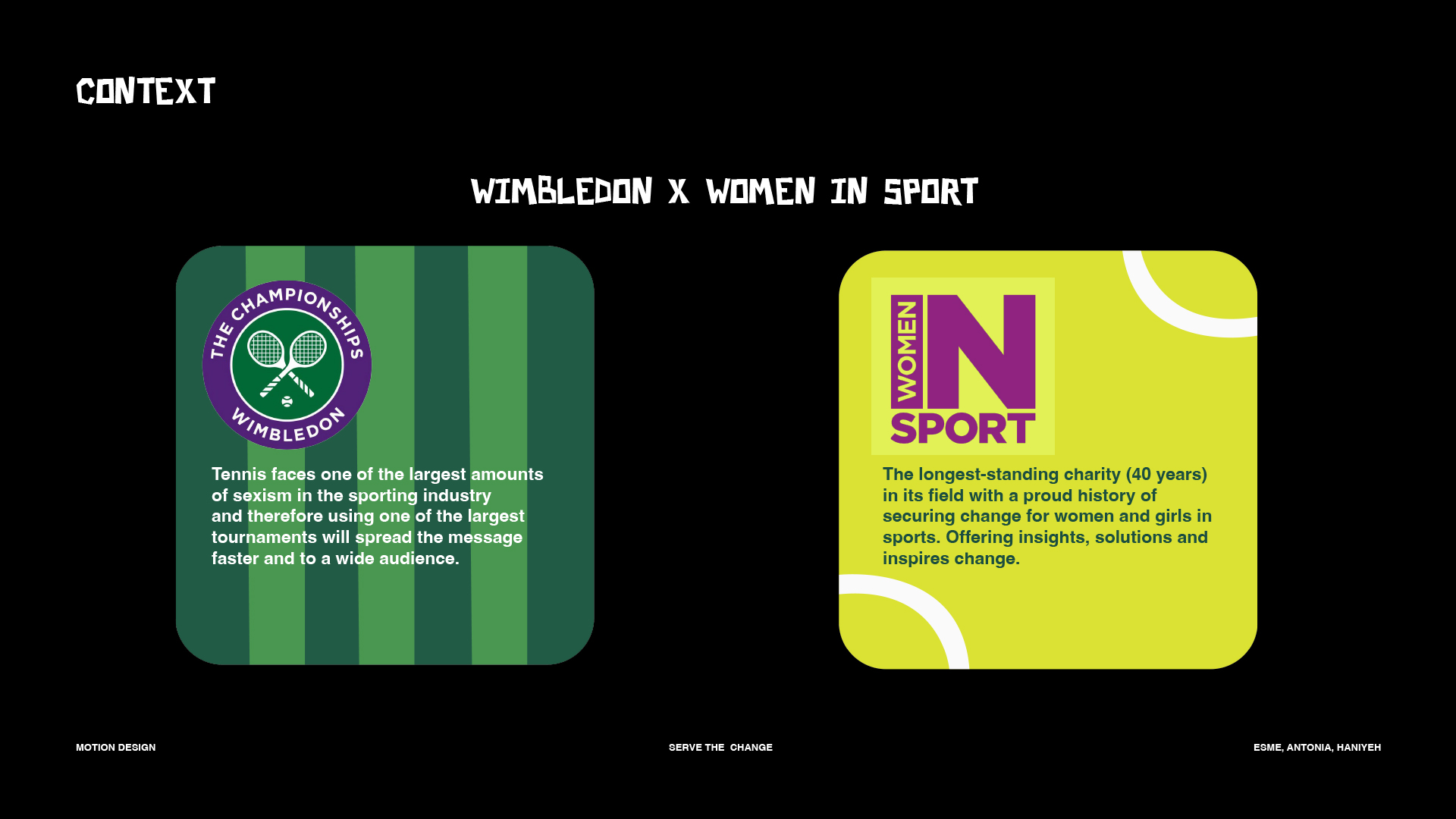
Through research we found that Tennis faces one of the largest amounts of sexism in the sporting industry and therefore we decided to use the platform of Wimbledon, one of the largesttournaments, to ensure the message will spread faster and reach a wide audience

A collaborative motion piece: Women In Sports
To support our narrative and emphasise the message we aimed to convey, we looked into Women In Sports, the longest-standing charity in its field to gain insights and solutions. We concluded that our motion piece will be a collaboration of wimbledon and women in sports, allowing our target audience to have a clear call to action: supporting and raising awareness of the matter via WIS.
How can we convey a powerful message via motion graphics?
After brainstorming topics that we were collectively passionate about, we decided to focus on discrimination towards women in sports, addressing sub-issues such as gender stereotyping in kits, and inequality in media coverage.